
June 2026 Update
Welcome to Workplace Horizon’s May update for Lifestock SA members. We trust you find this update informative and useful. If you have any topic suggestions for future updates, please contact us. Your feedback is also welcome!
PAYDAY SUPERANNUATION REMINDER
As referenced in previous updates, from 1 July 2026, all employers are required to pay superannuation at the same time as wages or salaries, replacing the current quarterly model.
Every ordinary pay cycle will trigger a seven (7) day deadline for super contributions to be processed and received by employees’ super funds. If an employer misses the new seven (7) day deadline for super payments, the superannuation guarantee charge (the penalty for failing to pay super contributions correctly) will become payable immediately from the next calendar day, with daily compounding interest on the shortfall.
This is not a small change and the Australian Payroll Association advises that “….it will affect payroll processes and cash flow” and “….it could cost the employer more on an annual basis, so [planning] should be done in plenty of time to ensure superannuation budgets for FY27 are accurate.”
The changes could lead to an increase in employee queries about super contributions and employers may consider updating the payslip format.
ANNUAL WAGE REVIEW 2026
Unions Up Pay Demand
The Fair Work Commission’s (FWC) upcoming Annual Wage Review decision is due within weeks and will directly impact the wages of millions of Australian workers whose pay is set by awards.
Previously, unions had been arguing for a 5% Annual Wage Review increase for the nation’s lowest-paid workers, but are now suggesting that a 6% increase is needed, as the ongoing conflict in the Middle East “continues to tear” into workers’ living standards, and in light of the 2026 Budget forecast that inflation will hit 5% by mid-year, if not higher.
Employers Urge Caution
Employers have continued to argue for restraint however have acknowledged that the energy crisis has simultaneously caused an inflation spike and undermined economic growth. Employers have proposed a 3.9% increase as a cautious and moderate approach.
A separate member update will be circulated as soon as possible after the FWC releases its AWR decision.
WORKPLACE HEALTH & SAFETY
Formal Safety Systems Matter More Than Ever on Farms
In many agricultural workplaces, work health and safety (WHS) has traditionally been learned informally. Knowledge is often passed down through experience, observation, and word of mouth. While this approach reflects the strong practical heritage of farming, it is increasingly being challenged by a clear reality - informal safety practices are no longer enough to manage modern farm risks.
The Reality: Farming Remains High Risk
Agriculture continues to be one of the most dangerous industries in Australia, with consistently high rates of fatalities and serious injuries.
Common causes include:
Vehicle and quad bike incidents (as reported in April and May member updates)
Machinery entanglement
Falls, trips and being struck by objects
At the same time, recent data highlights a worrying increase in incidents, reinforcing that existing approaches are not adequately controlling risk.
Relying on experience alone is not preventing injuries or saving lives.
The Problem
Informal safety systems typically rely on:
Verbal instructions
“Common sense” decision-making
Learning through observation or trial and error
While these approaches can work in low-risk environments, they create gaps in agriculture where:
Work is high-risk and unpredictable
Tasks involve animals, machinery, chemicals and isolation
Workers may be seasonal, young, or inexperienced
Critically, informal systems:
Are inconsistent across workers and tasks
Depend heavily on memory and individual judgement
Often fail under pressure, fatigue or distraction
Even experienced workers can make mistakes in a split second when attention lapses, despite having the right training and intentions.
Why “Experience” Isn’t Enough
Modern WHS thinking recognises that incidents are rarely caused bya single unsafe act. Instead, they result from a combination of:
Time pressure
Fatigue
Distraction
Routine complacency
These are normal human behaviours, not failures.
However, informal systems assume people will “just do the right thing,” even under pressure. Formal systems, by contrast, are designed to support safe decision-making when it matters most.
What Formal Safety Systems Do Differently
A formal WHS system creates a structured, repeatable approach to managing risk. It typically includes:
Clear processes and documentation
Documented safe work procedures
Induction and training checklists
Defined roles and responsibilities
Risk management frameworks
Identification of hazards
Risk assessment and control measures
Regular review and improvement
Monitoring and reporting
Incident and near-miss reporting
Safety audits and inspections
Action tracking and accountability
Why This Matters for Primary Producers
In primary producer enterprises, the risks are amplified:
Animals are unpredictable and can cause serious injuries
Facility design (yards, pens, raceways) directly affects safety
Manual handling and repetitive tasks increase physical strain
Formal systems ensure:
Workers understand animal behaviour risks
Safe workflows are built into facility design and operations
Controls are applied consistently—not just when someone remembers
The Cost of Getting it Wrong
Beyond the human impact, poor safety systems result in:
Lost productivity and downtime
Workers’ compensation claims
Staff turnover and skill shortages
Reputational and legal risk
With agriculture already facing labour challenges, creating a safe, professional workplace is also critical for attracting and retaining workers.
Moving from Informal to Formal: A Practical Shift
Transitioning doesn’t require complex systems. It requires consistency and commitment.
Practical first steps include:
Formalising induction processes for all workers
Introducing simple risk assessments for routine tasks
Keeping a basic incident and near-miss register
Reviewing high-risk activities (machinery, livestock handling, confined spaces)
Embedding regular safety conversations into team routines
The Bottom Line
Informal safety practices have shaped farming for generations, but the complexity and risk profile of modern agriculture demand more.
Formal safety systems don’t replace experience, they strengthen it.
They ensure that:
Knowledge is shared, not lost
Safety is consistent, not variable
Decisions are supported, not left to chance
In an industry where conditions can change quickly and consequences can be severe, a structured approach to safety is no longer optional—it’s essential.
If your safety approach relies on informal practices now is the time to review it. Formalising your WHS systems could be the most important investment you make this year, for your people and your business.
Need help developing your safety systems? Workplace Horizons can assist.
WAGE GROWTH MARCH QUARTER
The Australian Bureau of Statistics (ABS) has released the latest data on wage growth in Australia, showing it remained steady in the March 2026 quarter, led strongly by enterprise agreements.
The Wage Price Index rose 0.8% in the March quarter 2026, remaining steady since the September quarter of 2025.
Private sector wages rose 0.8% in the March quarter, while public sector wages increased 0.5% over the quarter.
According to the index, jobs with pay set by an enterprise agreement contributed 52% of wages growth, with the larger March quarter contribution driven by:
Rises in state public sector agreements
Jobs linked to the Early Childhood Education and Care (ECEC) worker retention payment that shifted pay setting to meet grant conditions
Regular private sector scheduled rises.
Healthcare and Social Assistance industry made the largest contribution to wages growth, with a 0.7% increase for the quarter.
A major Commonwealth-funded initiative in the Early Childhood Education and Care workforce saw wage rises paid in the private sector for that industry, while Queensland hospital health care workers were the main driver of public sector growth.
State/Territory Growth
The Australian Capital Territory registered the highest quarterly growth in wages at 0.8%.
The lowest quarterly wage growth was recorded in New South Wales, South Australia, and Western Australia at 0.4%.
Annual Growth in Wages
Annual growth in wages was 3.3%, a slight decrease from the 3.4% recorded in the December quarter of 2025, according to the ABS.
Annually, public sector wages grew at a faster pace than the private sector for a fifth consecutive quarter, but the gap has narrowed substantially.
Annual private sector wages rose 3.2% in the year to March quarter 2026, slightly lower than the 3.3% recorded in the same time last year.
In the public sector, wages grew 3.3% in the year to March 2026, also slightly lower than the 3.6% reported in the same period last year.
On a state and territory basis, the Australian Capital Territory logged the highest annual growth at 3.7%, while the Northern Territory recorded the lowest at 2.3%.

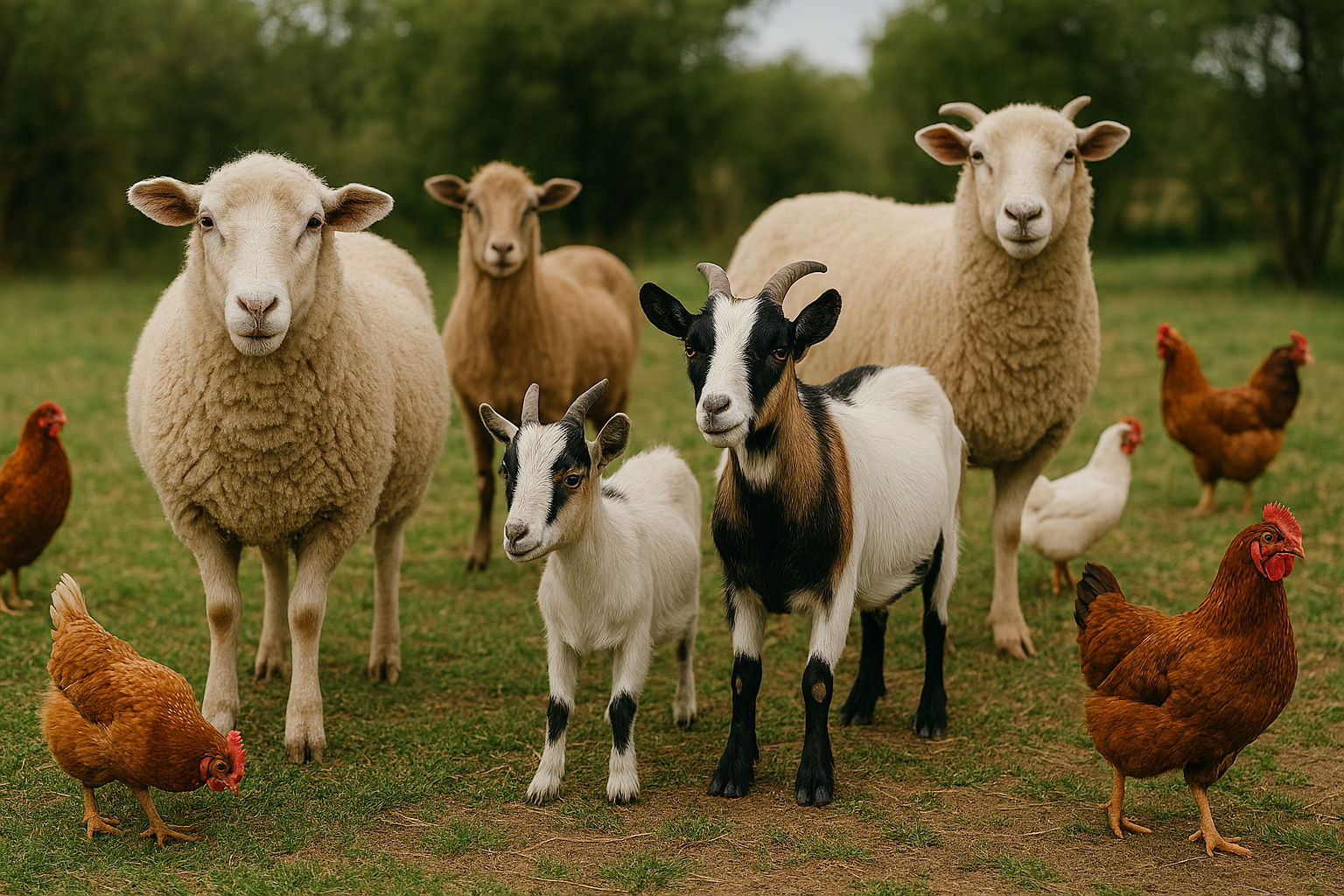
SA produced about 916 tonnes of goat meat in 2025, more than tripling its 2024 production in 2024.
Sheep’s eyes are placed on the sides of their heads, giving them panoramic vision. This helps them spot predators—but also explains why they sometimes seem a bit distracted.
Do you have a ‘Did You Know’ or ‘Fun Fact’ to contribute? Please email Robynne at robynne@wphorizons.com.au
If you have any questions regarding this newsletter or we can assist with your ‘people needs’ don’t hesitate to contact us:
Laurie Bolton Robynne Bolton
0410 529 528 0423 764 377
laurie@wphorizons.com.au robynne@wphorizons.com.au
www.wphorizons.com.au
Disclaimer
The information contained in this client update is general in nature and is provided for information purposes only. It does not constitute legal advice.
While care has been taken to ensure the information is current and accurate at the time of publication, laws and interpretations may change.
For advice specific to your circumstances, please contact us directly.