

September 2026 Update

Welcome to Workplace Horizon’s September update for SA Dairyfarmers’ Association (SADA) members. We trust you find this update informative and useful.
LOOKING AHEAD: A PERSONAL ANNOUNCEMENT
It is with mixed emotions that we share that this will be our final update for SADA members.
Following a recent health scare, Laurie has made the difficult decision to retire. While this has been a challenging time, we’re pleased to share that his recovery is progressing well. He is now focused on his health and wellbeing, spending more time with family and friends, and looking forward to his well-earned retirement.
As a result, Workplace Horizons will begin gradually winding down its operations over the coming months. While the business itself is transitioning towards closure, Robynne will continue working and will remain available to support clients during this period, helping to ensure a smooth and considered transition.
Although our service agreement with SADA will not be renewed, we will continue to honour the discounted member hourly rates throughout the transition period. Please be assured that all current work and existing commitments will continue to be managed and completed, with our focus remaining firmly on providing ongoing support and a seamless transition for members.
After more than 26 years of supporting workplaces, advocating for positive employment outcomes and building valued relationships with clients, this decision has not been made lightly. The relationships we have built with our clients have always meant far more to us than simply providing a service, which is why saying goodbye is proving so difficult.
It has been our privilege to work alongside SADA members, and to get to know you and your businesses personally. We sincerely hope that our support has made a positive contribution to your businesses and the broader industry, and we wish all members every success for the future.
Please don’t hesitate to contact us if you have any questions or have any workplace issues we can assist with over the next few months.
Laurie Bolton Robynne Bolton
0410 529 528 0423 764 377
laurie@wphorizons.com.au robynne@wphorizons.com.au
www.wphorizons.com.au
WORKPLACE HEALTH & SAFETY
Further to our item in the August Update (A Growing WHS Priority: Psychosocial Hazards), SafeWork SA has released a webinar covering this topic and Gender based Harassment at Work, that can be accessed at New Codes of Practice: Psychosocial Hazards and Sexual and Gender-based Harassment at Work | Webinar
We strongly encourage you to view this webinar and familiarise yourself with your WHS compliance obligations.
SA has its first Manslaughter Case
On 23 July 2026, charges were filed in the Adelaide Magistrates Court against Nylastex Tooling Pty Ltd, Nylastex Holdings Pty Ltd and the directors following the death of a 28 year old worker.
Industrial manslaughter became a criminal offence in South Australia on 1 July 2024, bringing SA into line with other states and territories across Australia. Individuals face a maximum penalty of 20 years’ imprisonment while the maximum fine for a corporate is $18 million.
The charges relate to a workplace fatality that allegedly occurred at the company’s Edwardstown plant on 24 July 2024:
It is alleged the worker was operating a milling machine when he was struck in the head by a metal object that had been ejected from the machine.
It is further alleged that an interlock guarding switch that was designed to prevent this from occurring had been disabled and/or bypassed.
Two days prior to the worker’s death an external technician engaged by Nylastex Tooling Pty Ltd had allegedly advised that there were safety concerns with the guarding switch.
The companies and its two directors had a health and safety duty to their workers. It is alleged they breached that duty by engaging in conduct with gross negligence that caused the death of the worker or were reckless as to the risk of death or serious injury.
A project manager employed by the company has also been charged with a Category 1 offence of engaging in gross negligence or reckless conduct contrary to Section 31 of the Work Health and Safety Act 2012.
The defendants will appear in court at a later date.
The Court's decision in this matter will establish a precedent that could affect employers more broadly, making it an issue that all businesses should be aware of and monitor closely.
National Farm Safety Week
National Farm Safety Week was held in July 2026 and once again, it highlighted the critical importance of maintaining a strong safety culture across the rural sector.
According to Safe Work Australia data, the agriculture, forestry and fishing industry recorded the highest rate of serious injury claims of any sector in 2025. At 11.3 claims per million hours worked, the rate was almost double the national average.
The sector has already recorded 13 fatalities this year, with vehicle rollovers, falls, machinery incidents and being struck by moving objects continuing to be the leading causes of death on Australian farms.
These figures serve as a timely reminder for all primary producers to regularly review their safety systems, ensure appropriate training is provided, and remain vigilant in managing workplace risks.
CONSULTATION OBLIGATIONS APPLY REGARDLESS OF BUSINESS SIZE
Recent Fair Work Commission (FWC) decisions have reinforced the importance of employers complying with Award consultation obligations when introducing major workplace changes or changes to employee rosters or hours of work.
In one case, a small business employing nine staff was covered by an Award requiring consultation once a firm decision had been made to implement a major workplace change. The employer acknowledged it had not reviewed the Award's consultation clause but argued that, due to its size and limited HR resources, it should be exempt from the requirement.
The matter proceeded to appeal, where a Full Bench of the Fair Work Commission confirmed that modern Award consultation obligations apply equally to all employers, including small businesses. There is no exemption based on business size.
This decision serves as an important reminder that employers must understand and follow the consultation requirements contained in any applicable modern award before implementing workplace changes.
Lessons for Employers
The decision highlights several important lessons for all employers:
Do not assume your business is too small for consultation obligations to apply. Consultation requirements apply regardless of business size.
Before making workplace changes, review the consultation provisions in the relevant award and ensure you understand your obligations.
Consult with affected employees about the proposed change and its likely impacts before the decision is finalised.
Provide employees with the required information in writing and keep records of consultation discussions and outcomes.
Failure to comply with consultation obligations can expose employers to legal risk, even where the underlying business decision is legitimate.
CONSULTATION OBLIGATIONS APPLY REGARDLESS OF BUSINESS SIZE
Most primary producers don't set out to get employment matters wrong. The challenge is that employment obligations continue to grow, while time and resources often don't.
Over the years, we've seen the same issues arise repeatedly across businesses. The good news is that most are easily avoided with a little planning and attention.
1. Not Having Clear Employment Contracts
Many employers rely on a verbal agreement or a quick conversation about pay and hours when engaging a new employee.
2. Assuming the Award Doesn’t Apply
Awards can be complicated, and many employers assume they already know what classification or pay rate applies to their employees.
Unfortunately, applying the wrong classification or overlooking an allowance can result in underpayments, even when the mistake was unintentional.
The Pastoral Award also has provisions for employees to be paid an annualised wage arrangement instead of a standard hourly rate. However, it is important to note that this type of arrangement is subject to strict compliance rules and record-keeping obligations which must be met.
Employment conditions should be reviewed periodically, particularly when employees take on new responsibilities or their role changes over time.
3. Poor Record Keeping
Good record keeping isn't just about compliance, it's good business practice.
Incomplete timesheets, missing leave records and insufficient documentation can create difficulties if a dispute arises about hours worked, leave balances or pay.
Keeping accurate records also makes payroll easier and provides confidence that employees are being paid correctly. It is also an obligation under the Fair Work Act; employers must retain employee records for seven years. The Fair Work Ombudsman Record-Keeping Fact Sheet is a useful resource to reference.
4. Letting Issues Go Unaddressed
Whether it's poor performance, inappropriate behaviour or ongoing lateness, many employers avoid difficult conversations because they don't want conflict. In reality, ignoring an issue usually makes it harder to deal with later.
Addressing concerns early, respectfully and consistently often prevents small problems from developing into much bigger workplace issues.
Further guidance re this topic is detailed below “Small Issues Often Become Big Employment Problems”.
5. Treating Family Members Differently
Family businesses are common throughout agriculture, but family relationships don't remove employment obligations.
Where family members are employees, it is still important to clearly define roles, responsibilities, hours of work and pay arrangements. This helps avoid confusion and ensures the business remains compliant with workplace laws.
The Bottom Line
Most employment problems don't start with major mistakes. More often, they arise from small issues that have been overlooked or assumptions that have never been checked.
Taking the time to review your employment arrangements, maintain good records and address concerns early can save significant time, stress and cost down the track. A quick health check now may help avoid a costly issue later.
Set aside an hour to review employment agreements, pay rates and workplace records.
SMALL ISSUES OFTEN BECOME BIG EMPLOYMENT PROBLEMS (refer 4. above)
Running a primary production enterprise often means wearing multiple hats. Between livestock, weather, machinery, markets and paperwork, people management can easily slide down the priority list.
The trouble is that many workplace issues don't fix themselves. In fact, the small things are often the ones that end up causing the biggest headaches.
It might start with an employee regularly arriving late, taking shortcuts, not following instructions, or creating tension within the team. It's easy to let these issues go for a while, particularly when everyone is busy and getting the work done seems more important than having an awkward conversation.
Unfortunately, what starts as a minor concern can quickly become a bigger problem if expectations haven't been made clear from the beginning.
One of the best things an employer can do is address concerns early. A simple conversation can often prevent a performance issue from escalating into a formal dispute. In many cases, employees may not even realise there is a problem until it is raised.
When discussing an issue, focus on the behaviour or performance concern rather than the individual. Be clear about what is expected, listen to their perspective and agree on what needs to happen moving forward.
It's also worth making a note of important conversations. You don't need pages of paperwork, but a brief record of what was discussed and any agreed actions can be invaluable if issues continue down the track. An email to yourself detailing a bullet point summary of your conversation and agreed outcomes, will suffice initially.
Remember too that there is often more to the story. A drop in performance or change in behaviour may be linked to fatigue, family pressures, health concerns or a lack of training. Taking the time to understand what's behind the issue can often lead to a better outcome for both the employee and the business.
Like most things in farming, dealing with a problem early is usually easier, quicker and less expensive than waiting until it becomes a crisis.
Employer Tip
If something is concerning you about an employee's performance or behaviour, don't put off the conversation. A respectful discussion today may save you from a much more difficult issue tomorrow.
WORKFORCE STATISTICS
The Australian Bureau of Statistics (ABS) has revealed that Australia's unemployment rate increased to 4.5% in July, following a nearly 16,000-person drop in the number of people employed.
The statistics also show:
the number of unemployed people went up by 4,000
the majority of the fall in employment came from males, which fell by 11,000; 10,000 fewer were employed part-time and 1,000 fewer full-time
female employment dropped by a slightly lower 5,000, with the number of women employed part-time declining by 22,000, but those employed full-time increased by 17,000
the country's employment-to-population ratio (the percentage of the working-age population that currently has a job), was down to 63.9%
Australia's underemployment stayed at 6.4% in July, with the participation rate declining to 66.9%.
On a State basis, South Australia saw the lowest unemployment rate across the country with 4.1%, a drop of 0.2 percentage points from a month ago.
Job Mobility
The ABS also published figures that show over a million Australians changed jobs in the year to February 2026.
There is a long-term trend of decreasing job mobility since the 1970s, with the latest data showing that Australia logged a 7.2% mobility rate in 2026, down from the 7.7% recorded a year ago.

Dairy cows are social animals and often form close friendships with other cows in the herd. Studies have shown they can become stressed when separated from their preferred companions.
One of Australia's oldest known cows was Myrtle from Victoria, who reached the remarkable age of 35 years, far exceeding the typical lifespan of most cattle; whilst the oldest cow ever recorded was Big Bertha, an Irish cow that lived to 48 years and nine months, a Guinness World Record that still stands.
A cow's unique muzzle pattern is as distinctive as a human fingerprint, with no two nose prints exactly the same.
If you have any questions regarding this newsletter or we can assist with your ‘people needs’ don’t hesitate to contact us:
Laurie Bolton Robynne Bolton
0410 529 528 0423 764 377
laurie@wphorizons.com.au robynne@wphorizons.com.au
www.wphorizons.com.au
Disclaimer
The information contained in this client update is general in nature and is provided for information purposes only. It does not constitute legal advice.
While care has been taken to ensure the information is current and accurate at the time of publication, laws and interpretations may change.
For advice specific to your circumstances, please contact us directly.

August 2026 Update
Welcome to Workplace Horizon’s August update for SA Dairyfarmers’ members. We trust you find this update informative and useful. If you have any topic suggestions for future updates, please contact us. Your feedback is also welcome!
WORKPLACE HEALTH & SAFETY
A Growing WHS Priority - Psychosocial Hazards
Primary producers have long understood the importance of managing physical safety risks on farms and in agribusinesses. However, psychological health is now receiving increased attention from regulators, with South Australia's Code of Practice: Managing Psychosocial Hazards at Work providing practical guidance on employer obligations under the Work Health and Safety Act 2012 (SA).
What are Psychosocial Hazards?
Psychosocial hazards are aspects of work that can cause psychological or physical harm. In primary production settings, these risks may arise from:
Long hours and excessive workloads during seeding, harvest or peak production periods.
Remote or isolated work.
Fatigue and inadequate recovery time.
Poor workplace relationships, bullying or harassment.
Lack of support or supervision.
Exposure to traumatic events, including serious injuries, fatalities, drought, bushfires, floods or animal welfare incidents.
Poorly managed organisational change or unclear roles and responsibilities.
These hazards can contribute to stress, anxiety, depression, fatigue and an increased risk of physical injuries.
What are your Obligations?
Under South Australian WHS laws, a Person Conducting a Business or Undertaking (PCUB), i.e. employers, have a duty to manage psychosocial risks in the workplace in the same way they manage physical risks. This means eliminating psychosocial risks where reasonably practicable or minimising them so far as is reasonably practicable.
SafeWork SA makes it clear that protecting workers from psychosocial harm is a legal duty, not simply a wellbeing initiative. Employers are expected to proactively identify hazards, assess risks, implement controls and review their effectiveness.
Practical Steps for Compliance
1. Identify psychosocial hazards
Consider what aspects of work may be causing stress or psychological harm. Information can be gathered through:
Discussions with workers
Toolbox meetings
Incident and near-miss reports
Exit interviews
Absenteeism and turnover trends
Observations of workplace practices
2. Consult with your Employees
Consultation is a specific WHS requirement. Employers and employees work together to identify hazards and determine appropriate controls. Employees often have valuable insights into workload pressures, fatigue risks and workplace culture issues.
3. Implement Controls
Effective controls focus on addressing the source of the risk. Examples for primary producers may include:
Managing workloads and staffing levels during busy periods.
Implementing fatigue management practices.
Ensuring workers have appropriate training and supervision.
Establishing clear expectations and responsibilities.
Providing procedures for managing inappropriate behaviour, bullying and harassment.
Supporting workers following traumatic incidents or emergency events.
Improving communication during periods of change.
Importantly, employee wellbeing programs or counselling services alone are unlikely to satisfy WHS duties if underlying workplace risks remain unmanaged.
4. Review and Monitor
Psychosocial risk management should be an ongoing process. Employers should review controls following incidents, complaints, seasonal workload changes, organisational changes or significant events such as bushfires, floods or drought conditions.
Why this matters for Primary Producers
Primary producers face unique psychosocial challenges, including seasonal pressures, geographic isolation, labour shortages and exposure to uncontrollable environmental events. Managing these risks not only helps businesses meet legal obligations but can also improve worker wellbeing, retention, productivity and overall workplace culture.
Key Message
SafeWork SA expects psychosocial hazards to be managed as part of every workplace's WHS system. For primary producers, now is the time to review existing safety practices, consult with workers and ensure psychological health risks are being identified and controlled alongside physical hazards. Taking a proactive approach will help create safer, healthier and more resilient rural workplaces.
Do your current WHS policies reflect your and your employees’ physical and psychosocial responsibilities and obligations?
MANAGING YOUR CASUAL WORKFORCE
Casual employment has undergone significant change in recent years. Understanding these changes is critical for primary producers who rely on a flexible workforce to manage seasonal demand and fluctuating labour requirements.
2021 Casual Conversion Reforms
The Fair Work Act 2009 (FWA) was amended in March 2021 to introduce a formal framework for casual employment. Key features included:
Statutory Definition
The reforms introduced the first legislative definition of a casual employee, based on the absence of a firm advance commitment to ongoing work.
Employer Obligations
Employers with more than 15 employees, were generally required to offer eligible casual employees conversion to permanent employment after 12 months of service where they had worked a regular pattern of hours for at least the previous six months.
Employee Requests
Eligible casual employees also retained a right to request conversion to full-time or part-time employment where they met the relevant criteria.
The Shift to the Employee Choice Pathway
From 26 August 2024, the casual conversion model was replaced by the Employee Choice Pathway, alongside a revised definition of casual employment.
The most significant change for employers is that responsibility for initiating the process has shifted from the employer to the employee. Rather than proactively offering conversion, employers are now required to respond when an eligible employee requests permanent employment.
1. Understanding the Definition of a Casual Employee
The FWA now defines a casual employee as a person whose employment relationship is characterised by an absence of a firm advance commitment to continuing and indefinite work, and who receives a casual loading or casual rate of pay.
When assessing whether an employee is genuinely casual, employers must look beyond the employment contract and consider the real substance, practical reality and true nature of the working relationship.
Relevant considerations include whether:
the employer can choose to offer or not offer work
the employee can choose to accept or reject work
continuing work is reasonably likely to be available
permanent employees perform the same kind of work; and
the employee works a regular pattern of hours
Importantly, no single factor is determinative. For example, an employee working regular hours does not automatically cease to be a casual employee. The entire employment relationship must be considered.
A Practical Test
A useful question for employers to ask is:
"If this employee declined their shifts next week, would it create a significant operational problem for the business?"
If the answer is yes, it may be worthwhile reviewing whether the employee continues to meet the legal definition of a casual employee.
This can be particularly relevant where casual employees become an integral part of year-round operations rather than being engaged solely to meet seasonal labour demands.
2. What Do These Changes Mean for Employers?
If your business engages casual employees, the Employee Choice Pathway has changed both your administrative obligations and your risk profile. The reforms have removed the requirement to proactively identify and offer conversion to eligible casual employees. However, they have increased the importance of correctly classifying casual workers and maintaining adequate records.
When an employee submits a request, employers must be able to assess whether the employee genuinely remains a casual employee based on the reality of the working arrangement, not simply what the employment contract says.
2.1. Compliance Obligations
Once an Employee Choice Pathway request is received, employers must:
Respond in writing within 21 days;
Clearly state whether the request is accepted or refused;
Provide reasons for any refusal; and
Follow any consultation requirements where a request is accepted.
Failure to comply can expose a business to disputes, Fair Work Commission proceedings and potential penalties under the Fair Work Act.
2.2. The Importance of Record Keeping
Well-maintained records are often the strongest evidence available if a dispute arises.
Employers should retain:
Employment contracts and any variations
Position descriptions and records of duties performed
Rosters, timesheets and attendance records
Records showing when work was offered, declined or cancelled
Payroll records, including casual loading payments
Leave and employment entitlement records
Copies of Employee Choice Pathway requests
Notes of meetings and consultations with employees
Internal assessments regarding an employee's casual status; and
Copies of all correspondence relating to the request and decision.
Where a request is refused, employers should carefully document both the reasons for the decision and the evidence relied upon.
2.3. Regular Workforce Reviews
Businesses that rely heavily on casual labour should periodically review their workforce arrangements.
This is particularly important in the agricultural sector, where employees engaged initially for seasonal or intermittent work can, over time, develop regular and predictable working patterns.
Regular reviews can help employers:
Identify potential Employee Choice Pathway issues early
Reduce the risk of disputes
Ensure workplace practices align with legal requirements; and
Improve workforce planning and budgeting.
3. Key Takeaways
When engaging casual employees, ensure the arrangement genuinely meets the FWA definition of casual employment from the outset.
When responding to an Employee Choice Pathway request, focus on the practical reality of the employment relationship, not just the wording of the contract.
Although employers are no longer required to initiate casual conversion discussions, they must be prepared to assess and respond to employee requests in accordance with the statutory process.
Accurate and detailed record keeping is essential. Employers should document not only the final decision but also the factors considered in reaching it.
Regular workforce reviews can help identify employees whose working arrangements may no longer align with the legal definition of casual employment, reducing both compliance risk and potential disputes.
Practical Tips
If you have casual employees who have worked regular hours for extended periods, now is a good time to review their arrangements and ensure your records would support your assessment if an Employee Choice Pathway request were received tomorrow.
When an employee requests a move from casual to permanent full or part-time employee, it is important that they clearly understand that if approved, they will lose their entitlement to casual loading payment (25%) they have received in lieu of paid annual and personal leave.
More information on this topic can be found at Fair Work Ombudsman - Casual Conversion
Do your employment contracts accurately reflect the casual employee definition and accompanying entitlements?
KEY INDUSTRIAL RELATIONS & TAX CHANGES
In addition to the introduction of Payday Super and the Annual Wage Review Decision, the following provides a brief overview of key industrial relations and tax changes that took effect from 1 July 2026.
1. Changes to Paid Parental Leave (PPL)
Eligible parents can now access up to 26 weeks of government-funded PPL (six months based on a standard five day week) – an increase from 24 weeks in 2025.
The amount of leave reserved for each parent in a couple will also increase from three weeks to four weeks on a use-it-or-lose-it basis. Single parents will receive the full entitlement of 26 weeks.
2. Tax Cuts to help with the Cost of Living
Several tax cuts have kicked in, including the new Working Australians Tax Offset (WATO).
The WATO provides an additional tax cut of up to $250 for working Australians on top of the tax cuts announced in the 2025-26 Budget. This measure is intended to support the workforce with the rising cost of living and is set to benefit over 13 million Australian workers.
Other tax changes include:
The 16% tax rate on taxable income between $18,201 and $45,000 dropped to 15%. From 1 July 2027, the tax rate will drop to 14%.
A $1,000 instant tax deduction has been introduced to deliver lower and simpler taxes for workers from 2026-27. It is estimated that 6.2 million workers, or 42% of taxpayers, will benefit from an average tax saving of $205 for the 2026-27 financial year.
OUTSIDE EMPLOYMENT
The latest Australian Bureau of Statistics (ABS) data shows there are currently 978,000 multiple jobholders in Australia, making up 6.5% of employed people. This is an increase of 0.3% over the previous quarter.
It’s been noted previously that there is a high prevalence of this in the agriculture sector.
So, what happens if an employee’s second job interferes with their work or their employer’s interests?
It is important to remember that what employees do in their own time is their own business. However, if an employee takes on a second job that begins to negatively impact their work, the situation can become legally complex. There is no “one hat fits all” approach that can be applied in these circumstances. Each instance needs to be considered on its own merits.
What are the Impacts?
Impacts on an employer include:
Employees attending the workplace “not fit for duty”
Employee’s poor performance is connected to performing work for another employer or personal business
Use of the employer’s resources or intellectual property
‘Time theft’ from the employer
Conflict or competition with the employer’s business and employee’s role
For primary producers, a common scenario may involve an employee working at a neighbouring farm, feedlot, packing shed, transport operator or hospitality venue before commencing work on your property. If the employee presents fatigued and is required to operate tractors, quad bikes, forklifts, harvesters or other plant and equipment, the business may have legitimate grounds to determine that the employee is not fit for duty and should not commence work until they can do so safely.
Other matters such as your business’s reputation as well as the employee’s honesty about the secondary employment are also relevant.
What Can You Do?
Employers can restrict employees from taking on other work to an extent via their employment contract and organisational policies.
Key clauses in employment contracts can assist to protect your business, such as:
Employees cannot engage in secondary employment without the employer’s prior written consent.
Employees must not engage in secondary employment that may constitute a conflict with their current role and employment obligations.
Any misuse of the employer’s confidential information and intellectual property may result in disciplinary action.
Employees are prohibited from engaging in secondary employment or activities which compete with their current employment.
A policy prohibiting secondary employment without employer consent is also likely to weigh in an employer’s favour should a dispute occur.
Nevertheless, these measures do not give an employer carte blanche to terminate an employee’s employment if they commence secondary employment with another employer. An employee’s individual circumstances are important and there are numerous considerations, including:
Does the secondary role raise a conflict of interest; is there an overlap with clients or competitors?
How will it affect their working hours or performance?
Will the employee be using company resources?
Is confidential information or intellectual property potentially at risk?
Has the employee has been transparent about their secondary employment, or have they failed to disclose it?
Employers need to assess the scope and nature of the secondary work and differentiate between what is potentially a harmless second job, a genuine conflict of interest or work health and safety concern.
UNEMPLOYMENT RATE HOLDS AT 4.4%
Newly released data from the Australian Bureau of Statistics (ABS) reflect that:
Seasonally adjusted unemployment remains at 4.4%, while there was a 76,000 person rise in employment, driven by a 47,000 person rise in part-time employment.
The number of unemployed rose by 13,000 people in June, which combined with the growth in employment, led to the participation rate rising by 0.3 percentage points to 67.0% in June.
The underemployment rate rose 0.2 percentage points to 6.5% in June and people aged 55-64 years old had the largest annual growth in the participation rate, up 0.8 percentage points to 70.6%.
The number of part-time hours worked grew 1.2% this month, with full-time hours worked remaining flat.
Annually, employment rose 1.7% from June 2025, and hours worked grew 1.8%.
Finally, trend employment grew by 0.2%, while hours worked remained flat in June.
Both the trend underemployment and underutilisation rates, the ABS noted in a statement, increased 0.1 percentage points, to 6.3% and 10.7% respectively.
As early as 1842, entrepreneurial South Australian dairy farmers were already exporting high-quality cheese and butter to India and South East Asia in the 1840s. A surprisingly global reach for what was then a tiny colonial dairy industry.
South Australia's dairy industry isn't just about cows, it includes camels. SA is home to the state's only camel dairy, where wild camels have been trained for milk production. Camel milk can sell for around $20 per litre, making it one of the most unusual dairy products produced in the state.
South Australia's dairy industry was once dominated by small farms with fewer than 70 cows, and milk was collected from roadside platforms in large metal cans waiting for horse-drawn carts or trucks. (I can still remember as a child, staying with my grandparents in Murray Bridge and putting out the billy for the milkman who delivered milk in the early hours of the morning!😊)
Do you have a ‘Did You Know’ or ‘Fun Fact’ to contribute? Please email Robynne at robynne@wphorizons.com.au
If you have any questions regarding this newsletter or we can assist with your ‘people needs’ don’t hesitate to contact us:
Laurie Bolton Robynne Bolton
0410 529 528 0423 764 377
laurie@wphorizons.com.au robynne@wphorizons.com.au
www.wphorizons.com.au
Disclaimer
The information contained in this client update is general in nature and is provided for information purposes only. It does not constitute legal advice.
While care has been taken to ensure the information is current and accurate at the time of publication, laws and interpretations may change.
For advice specific to your circumstances, please contact us directly.

APPENDIX 1 - ANNUAL WAGE DECISION
MINIMUM WAGE INCREASE - JULY 2026
The Fair Work Commission (FWC) has announced that minimum Award rates will increase by 4.75% effective from the first pay period commencing on or after 1 July 2026.
Update Attachments
Attachment A New wage rates
Attachment B Allowances
Attachment C Ordinary Hours of Work & Rostering
Attachment D Overtime & Penalty Rates
Unfair Dismissal Claims and Threshold
Small employers (less than 15 employees including casuals) are free from unfair dismissal claims for the first twelve months of employment. Larger employers (15 or more employees) are immune for first six (6) months.
However, employees are entitled to lodge adverse action claims, which may include allegations arising from the termination of employment.
The Fair Work Commission can generally only hear unfair dismissal claims where the employee's annual earnings are below the high-income threshold, which is $190,100 per annum from 1 July 2026.
The maximum compensation available for a successful unfair dismissal claim remains capped at six (6) months' remuneration.
Superannuation Guarantee Contribution (“SGC”)
Members are reminded that, from 1 July 2026, employers are required to pay superannuation contributions at the same time as wages and salaries. Each ordinary pay cycle will trigger a seven (7) day deadline for superannuation contributions to be processed and received by an employee's nominated superannuation fund.
The employer superannuation contribution rate remains unchanged - 12% of ordinary time earnings.
The Pastoral Award (Award) can be accessed via Pastoral Award 2020 [MA000035]
ATTACHMENT A
The following wage rates and allowances come into effect from the first pay period commencing on or after 1 July 2026.
NOTE:
If you pay rates above those specified, you must ensure that employees remain better off overall compared to the applicable Award. This includes maintaining wages and employment conditions that are more favourable than those provided under the Award. Refer to Clause 17 of the Award for the detailed requirements and arrangements that must be satisfied.
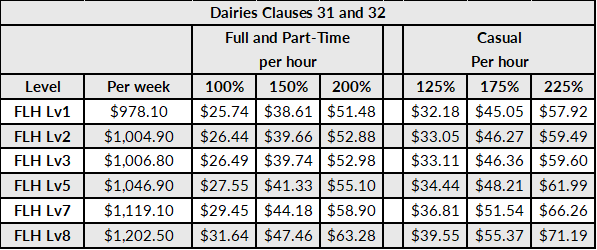
The Farm and Livestock classification structure which includes dairy workers and wage rates appear in clauses 31 and 32 in the Award.
FLH – Farm and Livestock Hand
NOTE:
Classification Levels 4 and 6 do not apply to Dairies
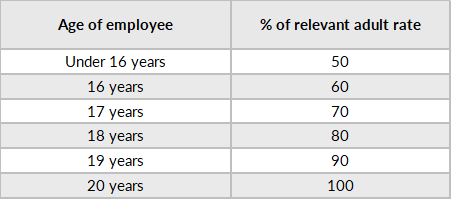
Junior Rates
ATTACHMENT B
ALLOWANCES
NOTE:
Regulations 3.33(3) and 3.46(1)(g) of Fair Work Regulations 2009 set out the requirements for pay records and the content of payslips including the requirement to separately identify any allowance paid.
1. All-purpose allowances - What is an all-purpose allowance?
All-purpose allowances are added to the daily or weekly rate and included in the rate of pay of an employee who is entitled to these two allowances. The all-purpose rate is included when calculating any penalties, loadings, or payment while an eligible employee is on any leave.
The following allowances are paid for all-purposes under the Pastoral Award:
i. leading hand allowance - clause 18.2(b); and
ii. first aid allowance - clause 18.2(c).
i. Leading hands – Clause 18.2(b)
A leading hand in charge of 2 or more people must be paid as follows:
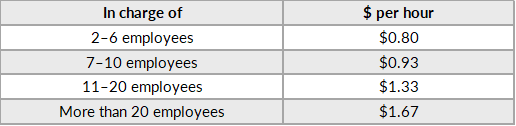
The allowance contained in clause 18.2 applies to part-time employees on a pro-rata basis.
i. First aid allowance - Clause 18.2(b)
An employee appointed by their employer to perform first aid duty as required in addition to their usual duties, and holding a current recognised first aid qualification, such as one from St John Ambulance or similar body, must be paid an allowance of
$ 0.49 per hour.
2. Other expense allowances (NOT all purpose) – Clause 18 Expense-related allowance details.
(a) Tool and equipment allowance
(b) Travelling allowance
(c) Use of vehicle allowance – $1.00 per kilometre
(d) Overtime meal allowance - $17.90 (unless meal provided)
(e) Re-imbursement of expenses
(f) Wet weather clothing and footwear
(g) Protective clothing
(h) Charges for accommodation, meat, goods, and services
ATTACHMENT C
ORDINARY HOURS OF WORK AND ROSTERING
Broadacre Farm
1. Minimum Engagement – Clauses 10.6 and 11.5
Part-time and casual Farm and Livestock Hands (“FLH”), excluding casual pieceworkers, must work or be paid for a minimum of three (3) hours on any shift.
The minimum payment is reduced to two (2) hours when the employee is:
(a) engaged to perform the work of a dairy operator; and
(b) is 18 years of age or younger; and
(c) is a full-time secondary school student.
2. Ordinary hours of work and rostering - Clause 34.
Clause 34.1
The average ordinary working hours for a FLH will be fixed by agreement between the employer and the employees but will not exceed an average of 38 hours per week over a 4-week period (refer clause 34.1).
Clause 34.2
The ordinary hours of work of FLHs (other than station cooks) will not exceed 152 hours in any consecutive period of 4 weeks (refer clause 34.2).
ATTACHMENT D
OVERTIME AND PENALTY RATES – Clause 35.
1. All time worked by an employee greater than the ordinary hours specified in clause 34*
Clause 35.1
Ordinary hours of work and rostering -will be regarded as overtime (refer clause 35.1).
*(more than 152 hours over 4 consecutive weeks).
2. Clause 35.2 Overtime and penalty rates
The rate of pay for overtime for a FLH will be:
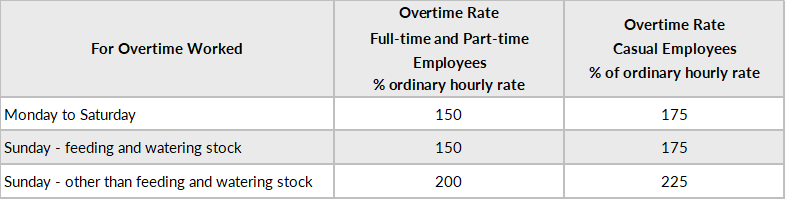
.
NOTE:
The overtime rates for casual employees have been calculated by adding the casual loading prescribed by clause 11.3(a)(ii) to the overtime rates for full-time and part-time employees prescribed by clause 35.2.
1. Clause 35.3
No employee will be entitled to payment for overtime, or equivalent time off instead, unless:
(a) the employee makes a claim to the employer or their authorised representative either within two (2) weeks after the overtime is alleged to have been performed; or
(b) by the next date of payment of the employee’s wages
whichever is the later.
2. Clause 35.4
Overtime and public holiday rates are calculated on the ordinary hourly rate before any deduction is made for keep.
3. Clause 35.5 - Public holidays
A farm and livestock hand required to work on a public holiday will be paid 200% of the ordinary hourly rate.
4. Clause 35.6.
An employee and employer may agree in writing to the employee taking time off instead of being paid for all overtime that is worked by the employee under this agreement.
Schedule E - Agreement for time off instead of payment for overtime
If you have any questions regarding this update don’t hesitate to contact us:
Laurie Bolton Robynne Bolton
0410 529 528 0423 764 377
laurie@wphorizons.com.au robynne@wphorizons.com.au
www.wphorizons.com.au
Disclaimer
The information contained in this client update is general in nature and is provided for information purposes only. It does not constitute legal advice.
While care has been taken to ensure the information is current and accurate at the time of publication, laws and interpretations may change.
For advice specific to your circumstances, please contact us directly.
July 2026 Update
Welcome to Workplace Horizon’s July update for SA Dairyfarmers’ Association members. We trust you find this update informative and useful. If you have any topic suggestions for future updates, please contact us. Your feedback is also welcome!
ANNUAL WAGE DECISION
Further to the Fair Work Commission announcing an increase in the modern award wage rates of 4.75%, effective from 1 July 2026, the Fair Work Ombudsman Wage Guides for the Pastoral Award have now been updated and are detailed in SADA - Appendix 1 - Annual Wage Decision
WORKPLACE HEALTH & SAFETY
Unwritten Rules
In June’s update we advised the need for formal safety systems within primary producers’ workplaces. A further extension to this need, relates to unwritten rules, informal norms, or shared understandings of “how things are done around here”. This informality is common in farming environments but can also introduce significant safety risks if left unmanaged.
On farms, these informal expectations might include things like:
starting work before daylight during busy periods
working through breaks or continuing after hours to “get the job done”
tolerating rough language or behaviour in the yards or sheds
relying on verbal instructions rather than documented procedures
While these practices often evolve from practical necessity or long-standing tradition, they can create inconsistency, fatigue, and unclear expectations—all of which increase WHS risk.Unwritten Rules
In June’s update we advised the need for formal safety systems within primary producers’ workplaces. A further extension to this need, relates to unwritten rules, informal norms, or shared understandings of “how things are done around here”. This informality is common in farming environments but can also introduce significant safety risks if left unmanaged.
In farms, these informal expectations might include things like:
starting work before daylight during busy periods
working through breaks or continuing after hours to “get the job done”
tolerating rough language or behaviour in the yards or sheds
relying on verbal instructions rather than documented procedures
When informal practices become “the rule”
Whether an unwritten rule is enforceable depends on how consistently it has been applied and communicated over time.
For example, imagine a livestock or dairy operation where workers are contracted to finish at 5pm, but for years the team has routinely knocked off at 3pm on Fridays once essential tasks are completed. Over time:
managers follow the same practice
new workers are told “we usually finish early on Fridays”
the arrangement becomes accepted by everyone
In this scenario, the early finish may become an implied term of employment. Even though it is not written into contracts, the consistent behaviour and shared understanding can effectively change the working arrangement.
This highlights an important point: workplace practices don’t need to be documented to carry weight—but that can create risk for employers.
The risk for farming businesses
Farming operations often rely heavily on trust, experience, and verbal communication. However, relying on informal arrangements alone can expose businesses to:
disputes about hours worked or expectations
inconsistent safety practices between workers
increased fatigue from unmonitored overtime
difficulty demonstrating compliance with WHS obligations
For example, in peak periods such as harvest, farrowing, or calving, it may become “normal” for workers to stay back without formally recording hours or clarifying whether overtime applies.
Over time, this can result in:
underpayment risks
burnout and fatigue-related incidents
challenges proving that additional hours were reasonable
Culture is not a Defence (“It’s just how we talk here”)
Informal workplace culture can also extend to behaviour, including swearing, banter, or crude language, particularly in physically demanding farm environments.
However, relying on “that’s just how things are done on farms” is not a strong defence if behaviour crosses the line into inappropriate or unsafe conduct.
Recent legal decisions reinforce that:
workplace culture does not override employer obligations
expectations must be clearly communicated and reinforced
employers must actively maintain safe and respectful workplaces
Where businesses can show they have:
clear policies
training and communication
consistent enforcement
they are far better placed to manage both safety and legal risk.
The Fair Work Act allows employers to request reasonable additional hours, but this is not unlimited. What is reasonable depends on factors such as:
the nature of the role
the impact on health and safety (including fatigue)
personal circumstances of the worker
whether the employee is compensated
In a farming context, this means that while flexibility is essential, employers must still ensure:
hours are monitored
expectations are clear
compensation arrangements are understood
Workplaces where “pitching in” is expected but not documented risk both underpayment claims and WHS breaches, particularly where fatigue becomes a contributing factor in incidents.
From informal to intentional
Informal practices are not inherently problematic—they often reflect strong teamwork and adaptability. The risk arises when they are:
inconsistent
unclear
or relied upon instead of formal systems
The key for farming businesses is to make the implicit explicit. This means:
clearly defining working hours and expectations
documenting safe work practices for routine tasks
reinforcing standards around behaviour and communication
keeping accurate records of hours worked and incidents
The Bottom Line
Farming has always relied on experience, trust and practical know-how—but modern WHS and employment expectations require more structure.
Unwritten rules can shape how work gets done—but without formal systems, they can also create risk.
By bringing clarity to expectations and embedding simple, consistent systems, farming businesses can protect both their people and their operations—while still retaining the flexibility the industry depends on.
The bottom line for employers is that the safest approach is clear documentation. Making the expectations in the workplace explicit is essential and that employers manage those expectations consistently across their business.
Need help developing your safety systems? Workplace Horizons can assist.
CLOSING THE LOOPHOLES REVIEW
The Australian government has been conducting a review of the Fair Work Legislation Amendment (Closing Loopholes) Act 2023 and the Fair Work Legislation Amendment (Closing Loopholes No. 2) Act 2024, with a draft report recently released.
The review assessed the operation and impact of key legislation changes including the Right to Disconnect, new wage theft laws and expanded protections for employees subjected to family and domestic violence.
Submissions were received from many interested parties on the impact of the reforms so far.
What the Review Found·
Overall, the review found that the reforms are largely working as the Government intended to eliminate regulatory gaps, enhance worker protections and improve safe working conditions.
The review also acknowledged that several areas still require attention – particularly around education and regulatory clarity.
In Summary:
The Right to Disconnect
The Right to Disconnect has not yet been tested in any court ruling, so businesses are still waiting for clarification on how the law will be interpreted in practice.
However, the review found that the law is so far doing what it was intended to do by encouraging bosses and workers to set healthy expectations about after-hours communication.
New definitions of ‘employee’ and ‘employer’
The Closing Loopholes No.2 Act made several changes to how employment is defined and treated, with new definitions focusing on the practical nature of the relationship rather than what’s stipulated in the contract of employment.
The review acknowledges that the new test for determining employment status has created some uncertainty for businesses, because employers can no longer rely solely on contractual terms. Instead, they need to keep assessing the reality of the working relationship as it plays out in practice over time.
Early evidence shows the change is working as intended. The review argues the laws are helping ensure workers are classified and hence paid fairly by focusing on the day-to-day reality of the relationship, rather than simply the contractual wording.
To ensure clarity on the laws going forward, the report recommends that the government provide additional guidance and practical tools. This should include digital tools that help employers and employees ensure correct classification of workers, identify applicable awards and calculate lawful pay.
Same Job, Same Pay Laws
In effect since November 2024, the Same Job, Same Pay legislation was designed to ensure that labour hire employees are paid at least the same full rate of pay as directly employed workers performing the same job.
The new framework has faced some early resistance, with employer groups arguing the pay calculations are too complicated and interfere with established enterprise bargaining arrangements.
However, the review found the laws are effectively achieving their core aim: preventing businesses from using labour hire arrangements to undercut enterprise agreement wages.
According to the review, more than 104 orders have already delivered wage increases of up to $60,000 a year for over 8,000 workers, while also encouraging more direct and permanent hiring.
Criminalisation of wage theft
The introduction of criminal wage theft penalties has caused concern among some employers, particularly around the risk of accidental non-compliance with Australia’s complex award system.
While no prosecutions have been finalised yet, the review concludes that the laws are playing an important role in strengthening workplace compliance by creating a serious deterrent for deliberate and intentional underpayment.
Paid family and domestic violence leave
While the paid family and domestic violence leave entitlement has been a positive change for many victim-survivors, the review found it was “not operating as effectively as it could”.
The reforms are not yet well understood, the report said, particularly among vulnerable and hard to reach worker cohorts.
The review found that workers in regional, rural and remote areas, migrant communities, young workers, women, First Nations workers and workers in high-risk sectors such as horticulture and cleaning are at heightened risk of not accessing or benefitting from the reforms.
It recommends investigating these barriers and improving outreach.
Early evidence shows the change is working as intended. The review argues the laws are helping ensure workers are classified and hence paid fairly by focusing on the day-to-day reality of the relationship, rather than simply the contractual wording.
What happens next?
The report lays out a roadmap for broader government action based on the findings. In addition to the specific measures mentioned above, the draft report recommends the following steps:
Allow time to review outcomes and to develop and conduct targeted future reviews. The report acknowledges that the reforms have only recently come into effect, and the longer-term impact of many amendments will become clearer over time.
Monitor and support regulator and tribunal capacity. This is partly a response to multiple reports that the Fair Work Commission has been inundated with AI-assisted claims relating to recent reforms.
Statutory clarification. The report acknowledges specific areas of confusion that require legislative clarification or amendment, such as employment definitions.
NEW STATISTICS FRAMEWORK
The Australian Bureau of Statistics (ABS) is implementing a new and more contemporary framework for underemployment and underutilisation statistics, called the “u-series”. It is set to become the official standard when fully implemented in mid-2027.
Data released on 29 May 2026 reveals that nearly 1.43 million Australians were underutilised in April 2026.
The u-series framework produces four headline measures. According to the ABS April 2026 u-series release:
The underemployment rate (UD-1) – employed people who prefer more hours, are available, and actively looked – rose to 3.3 per cent in April 2026, up from 3.1 per cent in March.
The reduced employment rate (RE-1) – employed people who worked fewer or no hours for economic reasons – fell to 2.0 per cent, down from 2.5 per cent in March.
The unemployment rate (UN-1) rose to 4.5 per cent, up from 4.3 per cent in March.
The total underutilisation rate (UU-1) was 9.3 per cent, down marginally from 9.4 per cent in March.
In headcount terms, this translates to 480,000 underemployed workers, 290,000 in reduced employment, and 690,000 unemployed, with some overlap between categories. The combined underutilisation among the employed population was 5.3 per cent.
The u-series also measures the volume of unused labour, not just the number of people. According to the ABS April 2026 data, there were just under 29 million hours of available but unused labour supply in the Australian economy, producing a volume-based total underutilisation rate of 5.3 per cent.
Why it matters
Only around half of part-time workers who prefer more hours actually looked for more hours, according to ABS Participation, Job Search and Mobility supplementary survey data – meaning the UD-1 headline figure understates the true pool of workers available for additional hours.
Broadening the criteria to include employed people who simply prefer and are available for more hours, without requiring active job search, pushes the underemployment figure to 7.8 per cent of all employed Australians.
This shows a substantial pool of employed Australians who are already part of the workforce but working below their preferred capacity.
Age breakdowns in the u-series data reinforce a familiar theme; reduced employment is consistently highest among workers aged 15–24, reflecting the concentration of casual and variable-hours roles in that cohort.
NEARLY 1 MILLION AUSTRALIANS ARE JUGGLING MULTIPLE JOBS
The latest Labour Account Australia released by the Australian Bureau of Statistics (ABS) revealed:
Total jobs in the country went up to 16,529,000 in the March quarter, up 0.7% quarterly and two per cent annually.
filled jobs, or roles currently occupied by workers, increased 0.6% quarterly to reach 16,185,000. This is a 1.9% increase from the same period last year.
job vacancies saw a quarterly increase of 5.2%, reaching 344,000 in the March 2026 quarter, equivalent to an annual increase of 4.1%.
Multiple job-holders
The number of employed people surpassed 15.1 million in the March quarter, up 0.7% quarterly and 1.8% annually.
The multiple job-holding rate sits at 6.5%, remaining around record levels between 6.4% and 6.7% since June 2022.
Overall, there were 978,000 multiple job-holders in the country in March 2026. This is up 0.3% from the previous quarter and 2.1% from a year ago.
Employees who have main jobs in the Agriculture, forestry, and fishing industry reported the highest multiple job-holding rate in March, at 9.1%.
On the other hand, multiple job-holding was least common among people who have main jobs in Electricity, gas, water, and waste services (3.3%).
Australians' working hours
When it comes to working hours, Australia saw a total of 6.1 billion hours actually worked in the March quarter, up 0.9% quarterly and 2.2% annually.
Single job-holders worked an average of 34.8 hours per week.
Multiple job-holders worked a total of 39.3 hours per week on average, including 30 hours for their main job and 9.3 hours in their secondary job.
The oldest recorded cow, Big Bertha of Ireland, lived to 48 years and 9 months. While cows can naturally live 15–20 years or more, commercial dairy cows in Australia typically remain in the milking herd for only around 5–7 years. Australia has approximately 2.1 million dairy cattle, including more than 64,000 dairy cows in South Australia. South Australia has nearly 200 dairy farms and around 65,000 dairy cows in production at any given time.
South Australia records some of the highest average milk yields per cow in Australia.
Do you have a ‘Did You Know’ or ‘Fun Fact’ to contribute? Please email Robynne at robynne@wphorizons.com.au
If you have any questions regarding this newsletter or we can assist with your ‘people needs’ don’t hesitate to contact us:
Laurie Bolton Robynne Bolton
0410 529 528 0423 764 377
laurie@wphorizons.com.au robynne@wphorizons.com.au
www.wphorizons.com.au
Disclaimer
The information contained in this client update is general in nature and is provided for information purposes only. It does not constitute legal advice.
While care has been taken to ensure the information is current and accurate at the time of publication, laws and interpretations may change.
For advice specific to your circumstances, please contact us directly.
June 2026 Update
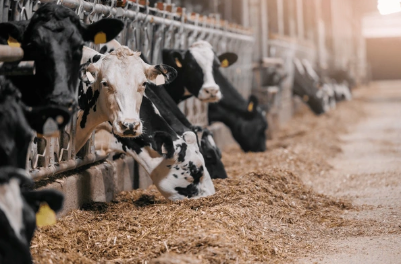
Welcome to Workplace Horizon’s June update for SA Dairyfarmers’ Association members. We trust you find this update informative and useful. If you have any topic suggestions for future updates, please contact us. Your feedback is also welcome!
SADA’S 90TH BIRTHDAY CELEBRATION
On Friday, 15 May 2026 we had the pleasure of attending SADA’s 90th birthday celebration dinner, a milestone event that brought together approximately 200 guests to honour almost a century of industry contribution and community connection.
Held in a warm and festive atmosphere, the evening was a true celebration in every sense. Guests were treated to a beautifully curated menu, where dairy naturally took centre stage, showcasing the richness and versatility of local produce. Special thanks to Udder Delights, La Casa Del Formaggio, Fleurieu Milk Company, The Yoghurt Shop, La Vera Cheeses, Golden North Ice Cream, Barossa Valley Cheese Company and Foodland Supermarkets. Without doubt, the menu paid fitting tribute to the industry SADA has represented for generations.
Beyond the exceptional food, the evening offered a valuable opportunity to reflect on SADA’s impressive history. Through stories and speeches shared throughout the night, guests gained insight into the organisation’s evolution over the past 90 years, from its early beginnings to its current role advocating for and supporting the dairy sector in South Australia. It was a reminder of the resilience, innovation and collaboration that continue to shape the industry today.
It was a pleasure to connect with a range of attendees from across the agricultural and business communities, including the chance to meet with one of our valued SADA clients. Conversations throughout the evening highlighted the strong relationships and shared commitment that underpin this sector.
Events like this not only recognise significant milestones but also reinforce the importance of community and partnership. Congratulations to SADA on reaching this remarkable 90 year achievement and hosting a wonderful celebration. We look forward to seeing what the next chapter holds.
We also made the Stock Journal! 😊South Australian Dairyfarmers' Association: 90 years leadership | Stock Journal | SA
PAYDAY SUPERANNUATION REMINDER
As referenced in previous updates, from 1 July 2026, all employers are required to pay superannuation at the same time as wages or salaries, replacing the current quarterly model.
Every ordinary pay cycle will trigger a seven (7) day deadline for super contributions to be processed and received by employees’ super funds. If an employer misses the new seven (7) day deadline for super payments, the superannuation guarantee charge (the penalty for failing to pay super contributions correctly) will become payable immediately from the next calendar day, with daily compounding interest on the shortfall.
This is not a small change and the Australian Payroll Association advises that “….it will affect payroll processes and cash flow” and “….it could cost the employer more on an annual basis, so [planning] should be done in plenty of time to ensure superannuation budgets for FY27 are accurate.”
The changes could lead to an increase in employee queries about super contributions and employers may consider updating the payslip format.
ANNUAL WAGE REVIEW 2026
Unions Up Pay Demand
The Fair Work Commission’s (FWC) upcoming Annual Wage Review decision is due within weeks and will directly impact the wages of millions of Australian workers whose pay is set by awards.
Previously, unions had been arguing for a 5% Annual Wage Review increase for the nation’s lowest-paid workers, but are now suggesting that a 6% increase is needed, as the ongoing conflict in the Middle East “continues to tear” into workers’ living standards, and in light of the 2026 Budget forecast that inflation will hit 5% by mid-year, if not higher.
Employers have continued to argue for restraint however have acknowledged that the energy crisis has simultaneously caused an inflation spike and undermined economic growth. Employers have proposed a 3.9% increase as a cautious and moderate approach.
A separate member update will be circulated as soon as possible after the FWC releases its AWR decision.
WORKPLACE HEALTH & SAFETY
Formal Safety Systems Matter More Than Ever on Farms
In many agricultural workplaces, work health and safety (WHS) has traditionally been learned informally. Knowledge is often passed down through experience, observation, and word of mouth. While this approach reflects the strong practical heritage of farming, it is increasingly being challenged by a clear reality - informal safety practices are no longer enough to manage modern farm risks.
The Reality: Farming Remains High Risk
Agriculture continues to be one of the most dangerous industries in Australia, with consistently high rates of fatalities and serious injuries.
Common causes include:
Vehicle and quad bike incidents (as reported in April and May member updates)
Machinery entanglement
Falls, trips and being struck by objects
At the same time, recent data highlights a worrying increase in incidents, reinforcing that existing approaches are not adequately controlling risk.
Relying on experience alone is not preventing injuries or saving lives.
The Problem
Informal safety systems typically rely on:
Verbal instructions
“Common sense” decision-making
Learning through observation or trial and error
While these approaches can work in low-risk environments, they create gaps in agriculture where:
Work is high-risk and unpredictable
Tasks involve animals, machinery, chemicals and isolation
Workers may be seasonal, young, or inexperienced
Critically, informal systems:
Are inconsistent across workers and tasks
Depend heavily on memory and individual judgement
Often fail under pressure, fatigue or distraction
Even experienced workers can make mistakes in a split second when attention lapses, despite having the right training and intentions.
Why “Experience” Isn’t Enough
Modern WHS thinking recognises that incidents are rarely caused bya single unsafe act. Instead, they result from a combination of:
Time pressure
Fatigue
Distraction
Routine complacency
These are normal human behaviours, not failures.
However, informal systems assume people will “just do the right thing,” even under pressure. Formal systems, by contrast, are designed to support safe decision-making when it matters most.
What Formal Safety Systems Do Differently
A formal WHS system creates a structured, repeatable approach to managing risk. It typically includes:
Clear processes and documentation
Documented safe work procedures
Induction and training checklists
Defined roles and responsibilities
Risk management frameworks
Identification of hazards
Risk assessment and control measures
Regular review and improvement
Monitoring and reporting
Incident and near-miss reporting
Safety audits and inspections
Action tracking and accountability
Why This Matters for Primary Producers
In primary producer enterprises, the risks are amplified:
Animals are unpredictable and can cause serious injuries
Facility design (yards, pens, raceways) directly affects safety
Manual handling and repetitive tasks increase physical strain
Formal systems ensure:
Workers understand animal behaviour risks
Safe workflows are built into facility design and operations
Controls are applied consistently—not just when someone remembers
The Cost of Getting it Wrong
Beyond the human impact, poor safety systems result in:
Lost productivity and downtime
Workers’ compensation claims
Staff turnover and skill shortages
Reputational and legal risk
With agriculture already facing labour challenges, creating a safe, professional workplace is also critical for attracting and retaining workers.
Moving from Informal to Formal: A Practical Shift
Transitioning doesn’t require complex systems. It requires consistency and commitment.
Practical first steps include:
Formalising induction processes for all workers
Introducing simple risk assessments for routine tasks
Keeping a basic incident and near-miss register
Reviewing high-risk activities (machinery, livestock handling, confined spaces)
Embedding regular safety conversations into team routines
The Bottom Line
Informal safety practices have shaped farming for generations, but the complexity and risk profile of modern agriculture demand more.
Formal safety systems don’t replace experience, they strengthen it.
They ensure that:
Knowledge is shared, not lost
Safety is consistent, not variable
Decisions are supported, not left to chance
In an industry where conditions can change quickly and consequences can be severe, a structured approach to safety is no longer optional—it’s essential.
If your safety approach relies on informal practices now is the time to review it. Formalising your WHS systems could be the most important investment you make this year, for your people and your business.
Need help developing your safety systems? Workplace Horizons can assist.
WAGE GROWTH MARCH QUARTER
The Australian Bureau of Statistics (ABS) has released the latest data on wage growth in Australia, showing it remained steady in the March 2026 quarter, led strongly by enterprise agreements.
The Wage Price Index rose 0.8% in the March quarter 2026, remaining steady since the September quarter of 2025.
Private sector wages rose 0.8% in the March quarter, while public sector wages increased 0.5% over the quarter.
According to the index, jobs with pay set by an enterprise agreement contributed 52% of wages growth, with the larger March quarter contribution driven by:
Rises in state public sector agreements
Jobs linked to the Early Childhood Education and Care (ECEC) worker retention payment that shifted pay setting to meet grant conditions
Regular private sector scheduled rises.
Healthcare and Social Assistance industry made the largest contribution to wages growth, with a 0.7% increase for the quarter.
A major Commonwealth-funded initiative in the Early Childhood Education and Care workforce saw wage rises paid in the private sector for that industry, while Queensland hospital health care workers were the main driver of public sector growth.
State/Territory Growth
The Australian Capital Territory registered the highest quarterly growth in wages at 0.8%.
The lowest quarterly wage growth was recorded in New South Wales, South Australia, and Western Australia at 0.4%.
Annual Growth in Wages
Annual growth in wages was 3.3%, a slight decrease from the 3.4% recorded in the December quarter of 2025, according to the ABS.
Annually, public sector wages grew at a faster pace than the private sector for a fifth consecutive quarter, but the gap has narrowed substantially.
Annual private sector wages rose 3.2% in the year to March quarter 2026, slightly lower than the 3.3% recorded in the same time last year.
In the public sector, wages grew 3.3% in the year to March 2026, also slightly lower than the 3.6% reported in the same period last year.
On a state and territory basis, the Australian Capital Territory logged the highest annual growth at 3.7%, while the Northern Territory recorded the lowest at 2.3%.
Cows can recognise and remember faces, human and herd mates alike, for years.
South Australia has nearly 200 dairy farms and around 65,000 dairy cows in production at any given time.
Do you have a ‘Did You Know’ or ‘Fun Fact’ to contribute? Please email Robynne at robynne@wphorizons.com.au
If you have any questions regarding this newsletter or we can assist with your ‘people needs’ don’t hesitate to contact us:
Laurie Bolton Robynne Bolton
0410 529 528 0423 764 377
laurie@wphorizons.com.au robynne@wphorizons.com.au
www.wphorizons.com.au
Disclaimer
The information contained in this client update is general in nature and is provided for information purposes only. It does not constitute legal advice.
While care has been taken to ensure the information is current and accurate at the time of publication, laws and interpretations may change.
For advice specific to your circumstances, please contact us directly.

May 2026 Update
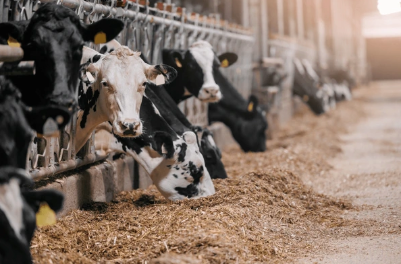
Welcome to Workplace Horizon’s update for SA Dairyfarmers’ Association SA members. We trust you find this update informative and useful. If you have any topic suggestions for future updates, please contact us. Your feedback is also welcome!
WORKPLACE HEALTH & SAFETY
Quad Bike Safety - Public Consultation
March’s update included an article “Farm Safety – Quad Bikes and Motorbikes”.
Coincidentally, on 20 April 2026, Safe Work Australia is seeking feedback on a range of regulatory and non-regulatory options to manage the risks when operating quad bikes in the workplace and ultimately improve quad bike safety. Public consultation opened on 20 April 2026.
Since 2011, 245 people have died in quad bike related incidents in Australia. The majority of fatalities were the result of a collision or rollover; 43 of these fatalities were aged 19 or under. Ten quad bike fatalities have been recorded so far in 2026 (as at 9 April).
Regulatory options for consideration during the public consultation process include:
requiring operator protective devices (OPDs) to be fitted on all quad bikes when used in the workplace;
mandating helmets are worn on all quad bikes when used in the workplace;
passenger restrictions on operator-only (type 1) quad bikes when used in the workplace; and
restricting the use of all quad bikes in the workplace to riders aged 16 years and over.
Safe Work Australia is particularly interested in feedback on the practical impacts of these options, including benefits and costs, and any unintended consequences.
Non-regulatory options include:
improving quad bike data collection processes; and
conducting targeted quad bike safety communication activities.
It is also seeking stakeholders’ views on other options that could improve quad bike safety in the workplace.
Stakeholders, industry representatives, WHS regulators and members of the public with an interest in quad bike safety in the workplace, are encouraged to have their say.
Given the extensive use of quad bikes within the farming community, this review provides you with the opportunity to share your views regarding this important issue. Further details regarding the options outlined above and associated questions can be accessed via Safe Work Australia’s Discussion Paper.
Information gathered via the consultation process will be considered by Safe Work Australia Members.
Consultation closes on 11.59 pm (AEST) on Monday 1 June 2026.
Additional information about quad bikes is available on Safe Work Australia’s website and its Interactive Quad Bike Data Dashboard
SafeWork SA Safety Campaign Launch
Between 2022 and 2025, SafeWork SA received:
300 notifications of serious falls
196 slip-and-trip notifications
42 for roll-away vehicles
Twelve people died and 288 people were seriously injured during the same period.
SafeWorkSA has launched a major safety campaign, ‘Safety at work is a serious job’ across all forms of media and social media.
To obtain free resources, the campaign hub can be accessed via Safety at work is a serious job.
You are encouraged to familiarise yourself with the campaign and resources. Preventative actions that support reducing risks are always worthwhile.
Middle East Conflict
The ongoing middle east conflict Iran is affecting Australian primary producers through higher input and operating costs. Disruptions to shipping through the Strait of Hormuz have pushed fuel prices higher, increasing costs associated with on farm machinery use, livestock transport and freight movements.
Higher fertiliser prices are also flowing through to pasture improvement and fodder production, placing upward pressure on supplementary feed and hay costs.
Beyond the economic disruption, it is important to keep a close eye on wellbeing. Prolonged uncertainty and constant news updates can take a psychological toll on you, your family and your employees, so building in practical supports now can help prevent issues escalating.
Practical wellbeing tips for you, your family and your team
The following are common‑sense tips you may already know. However, in the midst of our busy day‑to‑day lives and our efforts to support balance and well‑being, they offer timely and valuable reminders.
Acknowledge the pressure
Stress during uncertain times is normal. Naming the pressure and talking openly about challenges can reduce isolation and normalise help seeking.Focus on what you can control
Break problems into smaller, manageable decisions and focus on the next practical step, rather than trying to solve everything at once.Maintain routine where possible
Consistent daily habits around work, meals and sleep help provide stability and support wellbeing during periods of uncertainty.Watch fatigue and burnout
Long hours compound stress and increase safety risks. Where possible, rotate demanding tasks, schedule regular breaks and prioritise rest.Keep communication open at homeTalk with family members about pressures and financial concerns in age appropriate ways to reduce tension and misunderstandings.
Stay connected
Make time to check in with neighbours, peers or trusted industry contacts, even a brief conversation can help. Where you employ employees, simple check-ins can also help identify support needs early.Limit negative information overload
Stay informed, but consider setting boundaries around news and social media. Constant exposure to distressing updates or speculation can increase anxiety.Reach out early for support
If stress, worry, irritability or sleep issues persist, speak with a trusted adviser, GP, rural counsellor or helpline. Getting support early can make a real difference for you and those around you.
LANDMARK FAIR WORK COMMISSION RULING
A Fair Work Commission (FWC) ruling on 31 March 2026 will, for the first time, require workers aged 18 to 20 to be paid the same award wage as adults.
The decision applies to the retail, fast food and pharmacy industries. Under the existing framework, 18-year-olds receive 70% of the applicable award rate, rising incrementally to 80% at 19 and 90% at 20 years of age.
The decision abolishes this longstanding system of age-discounted pay rates and is currently limited to three awards: the General Retail Industry Award, the Fast Food Industry Award, and the Pharmacy Industry Award, which cover employees at some of Australia's largest employers, including major supermarket chains and fast food restaurant operators.
Approximately half a million workers are expected to benefit from the decision, based on Australian Bureau of Statistics (ABS) labour force data.
Wider Implications
The decision indicates the FWC no longer regards age, by itself, as a sufficient justification for paying adult employees less than the award minimum. It is therefore more than a pay rise currently confined to particular industries and is likely to flow through to other awards over time. We will continue to monitor any similar amendments to other awards, including the Pastoral Award and advise according.
TIMING OF FINAL PAY RULES TIGHTEN FOR EMPLOYERS
Recent court decisions have confirmed that employers who fail to pay employee entitlements on the final day of employment expose themselves to financial penalties. Importantly, these decisions emphasise that penalties may arise from technical breaches of the Fair Work Act, even where the breach is inadvertent or arises from longstanding payroll practices.
Historically, many employers have paid termination entitlements either within seven (7) days of termination or in the next payroll cycle. This approach largely stems from modern award provisions requiring outstanding wages and other award‑based entitlements to be paid no later than seven (7) days after termination.
While this may appear inconsistent with current case law, most awards also include guidance that payment in lieu of notice must be paid at termination. In relation to accrued leave and redundancy pay, awards operate subject to the National Employment Standards (NES). Accordingly, where there is any inconsistency between a modern award and the NES, the NES prevails.
Case law now makes it clear that employers are required to pay all termination entitlements on an employee’s last day of employment, regardless of past practice or any modern award wording suggesting later payment.
Practical steps for employers
Irrespective of their employment status, when preparing for an employee’s final day of employment, you should:
Ensure termination payments are calculated and ready to be paid on the employee’s final day.
Where payroll or banking processes restrict same‑day payment, consider aligning the termination date with a payroll processing date.
If payment cannot be made on the intended termination date, consider using partial notice or ‘garden leave’ so that the employment end date aligns with the next payroll run, ensuring statutory entitlements are paid on the termination date.
When preparing for an employee’s final day of employment we recommend that you:
Ensure that your employee’s termination payments are ready to be made on their last day of employment.
If there are restrictions on when payments can be made, consider aligning your employee’s termination date with a date on which their termination entitlements can be paid.
If payments cannot be made on the termination date, consider the use of partial notice or ‘garden leave’ for part of the notice period so that the termination date can align with the next payroll run to ensure that statutory entitlements are paid on the termination date.
Why does this matter?
Late payment of termination entitlements can attract civil penalties, even where underpayments are minor or unintentional. Courts have made it clear that payroll timing issues or longstanding practices do not excuse non‑compliance. Late payment is now a high‑risk breach, not an administrative oversight.
The case law is now clear that employers must pay employees termination entitlements on their last day of employment, irrespective of any prior practice or modern award provisions.
2026 ANNUAL WAGE REVIEW
The Fair Work Commission (FWC) is conducting the annual wage review (AWR) of the national minimum and award wages. Submissions are received from interested parties and, unsurprisingly, the submissions and opinions vary.
Last year the FWC granted a 3.5% rise for all award rates and the national minimum wage.
This year the ACTU is seeking a 5% rise in award rates and the minimum wage, to keep pace with cost-of-living pressures including the fuel price rises from the Middle East conflict and interest rate hikes.
The ACTU's claim would lift the national minimum wage from $948/week ($24.95/hour; $49,296 per annum), to $995.40/week ($26.19/hour; $51,761 per annum).
Peak employer body the Australian Industry Group (AIG), will seek a 3.5% rise, as both economically responsible and on the basis that it considers the current inflation rate, within the range of the Reserve Bank's target band of between 2 and 3%.
The latest CPI for the year to January, increased by 3.8% annually.
In its submission to the AWR, the federal government is recommending that the FWC award an economically sustainable real wage increase to Australia’s nearly three million minimum wage and award-reliant workers, particularly in view of the ongoing effects of higher fuel prices. The government’s submission does not recommend a specific wage increase, given the FWC’s role as an independent arbiter.
We note that these submissions were made either before, or very shortly after, the Middle East conflict commenced and fuel prices spiked, which is expected to substantially increase cost‑of‑living pressures. How the FWC addresses the impact of these developments in the AWR remains to be seen. However, it is reasonable to expect that these issues will be considered and addressed in its decision.
The FWC typically hands down its AWR decision in early June, with any increases to the national minimum wage and award wages taking effect from the first full pay period on or after 1 July. A member update detailing the AWE decision will be circulated as soon as possible after the FWC’s AWE decision is published.
KEY THEMES FROM NATIONAL EMPLOYMENT STANDARDS REVIEW
The Federal Government’s review of the National Employment Standards (NES) is currently underway. While written submissions closed on 27 February 2026, public hearings are continuing. Although a final report is not expected until late 2026, several key themes are beginning to emerge. These developments are worth noting, as they may signal future changes affecting your obligations and workforce planning.
Annual Leave
The current four-week annual leave model was established 50 years ago and does not account for the 4½ weeks of unpaid overtime the average Australian worker now performs.
Unions and academics have argued for an increase in the current annual leave standard of 20 to 25 days.
Industry bodies including the Australian Chamber of Commerce and Industry (ACCI) argue that any increase is unnecessary, stating that existing annual leave entitlements are appropriate and sufficiently generous when compared internationally.
Extending paid leave to casual workers
Several unions and other groups have advocated for paid leave entitlements to be extended to casual workers.
Unsurprisingly, industry bodies oppose this change, arguing that “misalignment” with contemporary rostering is already driving too much litigation.
The legal definition of a casual worker remains inconsistent across the industrial relations system raises another issue that. An employee may be classified as casual in one context, but treated differently in another, making it difficult to determine who should qualify for entitlements and on what basis.
Changes to redundancy entitlements for long-serving employees
Two key issues have gained attention:
Currently, small businesses (those with fewer than 15 employees) are exempt from redundancy pay obligations. Some submissions have proposed extending redundancy entitlements to employees of small business employers, a move that would significantly increase costs for affected businesses.
Submissions have also questioned the current maximum redundancy framework, under which redundancy pay peaks at 16 weeks after nine (9) years’ service and reduces to 12 weeks once an employee reaches ten (10) years’ service. The original rationale for this reduction was that long service leave would also become payable at that point, offsetting the decrease in redundancy pay. Groups including the ACTU and the Law Council of Australia argue this reduction is counterintuitive and unfairly penalises long‑serving employees
Consulting workers on AI adoption
The recent advent of legislation in NSW (Work Health and Safety Amendment (Digital Work Systems) Bill) places obligations on employers to manage risks associated with AI, algorithms and digital platforms. There is now a push to include consultation provisions in the NES requiring employers to consult employees before introducing AI that tracks performance or changes job descriptions.
Whilst awards currently provide a framework for consultation if there is to be major workplace change, including technology, there are no consultation requirements under the NES relating specifically to the use of AI.
Strengthening reproductive health and parental work rights
Another key theme relates to bolstering protections for parents and those trying to conceive.
Unions and other parties argue that the definition of parental leave should be expanded to include reproductive health leave. Specifically, there are calls for twelve (12) days’ paid leave for IVF treatments, endometriosis management and screenings to ensure parents don’t exhaust their personal (sick)/annual leave prior to falling pregnant.
Other submissions, including one from Monash University, argue that the 12 month continuous service requirement to access unpaid parental leave should be removed as there is currently a disconnect between workplace entitlements and government-funded parental leave pay.
Further updates will be provided as the review progresses.
UPWARD TREND IN JOB ADVERTISEMENTS ENDS IN MARCH
The latest research from ANZ-Indeed shows that the rising trend of job ads ended in March 2026; in fact most of an increase of 3.2% recorded in February was reversed.
March saw a broad-based decline across almost every state and territory, with a monthly drop of 3.1%. The conflict in the Middle East is anticipated to further reduce labour demand in the coming months, according to the research.
Job ads fell considerably in New South Wales, Queensland, and Victoria, although opportunities remain well above their levels at the end of 2025.
By industry, the drop in job ads was concentrated in education, nursing, personal care, and retail.
Job ads for industries highly exposed to the conflict in the Middle East, such as logistics and transport remained largely unchanged in March.
Citing the minutes of the March Reserve Bank of Australia (RBA) Monetary Policy Board meeting, the report warned that the prolonged conflict has the "potential to lead to a reduction in labour demand."
Employers across Australia have been expressing alarm over the ongoing conflict, with rising absenteeism in workplaces prompting the implementation of working from home arrangements to cushion the impact of rising fuel prices in the country.
Milk yields per cow in SA are among the highest in Australia, averaging over 7,000 litres per cow per year, well above the national average.
Cows have best friends and can become stressed when separated.
Do you have a ‘Did You Know’ or ‘Fun Fact’ to contribute?
Please email Robynne at robynne@wphorizons.com.au
If you have any questions regarding this update or we can assist with your ‘people needs’ don’t hesitate to contact us
Laurie Bolton Robynne Bolton
0410 529 528 0423 764 377
laurie@wphorizons.com.au robynne@wphorizons.com.au
www.wphorizons.com.au
Disclaimer
The information contained in this client update is general in nature and is provided for information purposes only. It does not constitute legal advice. While care has been taken to ensure the information is current and accurate at the time of publication, laws and interpretations may change.
For advice specific to your circumstances, please contact us directly.
April 2026 Update
Welcome to Workplace Horizon’s April’s update for SA Dairyfarmers’ Association members. We trust you find this update informative and useful. If you have any update topic suggestions, please contact us. Your feedback is also welcome!
COMPLYING WITH THE NEW PAYDAY SUPER LAW
A reminder that the new Payday super law comes into effect from 1 July 2026. The law aims to ensure that employees’ legal SG entitlements are paid promptly and regularly.
Businesses that don’t comply face fines and interest, so understanding the new requirements is in your best interest.
Importantly, as an employer it is your responsibility to ensure that super contributions are allocated to the correct fund within the required timeframe. Therefore, it is critical to ensure that you have the correct fund details for every employee.
What are the penalties for non-compliance?
From 1 July 2026, a new super guarantee charge (SGC) regime will impose a penalty if an employer does not pay their employee’s super within seven business days of paying their salary or wage.
The charge would include interest calculated on a compounded daily basis on any SG shortfall as well as an administration fee of up to 60% of the shortfall.
Exceptions
There are several exceptions to the seven (7) day rule:
For new employees, the initial super contribution can be made up to 20 days after a wage or salary is paid;
For existing employees who change super funds, the first payment to the new fund can be made up to 20 days after a wage or salary is paid;
Exceptional circumstances, such as IT outages, may trigger an extension;
State-wide and nation-wide public holidays also extend the due date.
Mid-cycle and ‘out of cycle’ adjustments
‘Out of cycle’ payments are treated differently.
Super contributions relating to payments made outside the normal pay run frequency; for instance, bonuses, commissions or backpays can be made within seven (7) business days of the next usual pay cycle.
It is not yet clear what happens when an employee leaves the business mid-cycle. It is thought that if the final payment is made as an ad-hoc or out-of-cycle payment, the SG contribution is then due within seven (7) business days of the next usual pay cycle.
Definitive guidance regarding this issue is expected to be released soon by the ATO.
We recommend that you consider starting to pay employees’ superannuation aligned to your regular pay cycle now, to trial your procedures to ensure they are fully compliant prior to 1 July 2026.
Further information about how Payday Super works is available via the following links:
About Payday Super – Superannuation Changes | Australian Taxation Office
Payday Super: New rules starting 1 July 2026 - Fair Work Ombudsman
MORE SUPER NEWS
The Federal Government's revised legislation to cap the concessional tax treatment for earnings from superannuation accounts with balances exceeding $3 million has passed unamended after winning Greens support.
Super balances above $3 million (the "large superannuation balance threshold") will be taxed at 30% on earnings and a new cap (the "very large superannuation balance threshold") for balances over $10 million will have earnings taxed at 40%.
The thresholds will be indexed, with the $3 million cap aligned to the CPI and rising in $150,000 increments and the $10 million cap rising in $500,000 increments.
Last year, the Federal Government stated that there are 90,000 people with super balances exceeding $3 million and 8,000 with balances beyond $10 million, or a total of about 0.5% of the population. The average balance for those holding more than $10 million is $19 million.
The new concessional cap measures will start in July 2026, coinciding with the arrival of the third tranche of income tax cuts.
The Bill's explanatory memorandum says it will increase receipts by $2.15 billion over the five years from 2024-25, but it is heavily backloaded, with $100 million arriving in 2027-28 and $2.05 billion in 2028-29.
Iran Conflict Will Have Little Impact on Aussie Workers Super
The Super Members Council (SMC) has said that:
our national superannuation system is built to withstand short-term shocks, even as share markets experience volatility in the wake of the US-Israeli strikes on Iran, noting that the instability will understandably cause concern for Australians; and
our super system is built to withstand short-term shocks and deliver strong returns for members over decades, not days or weeks. Historically super has performed strongly over the long term, despite fluctuations in the equity markets, with profit-to-member funds returning over 7.5% a year on average over the last decade to December.
The group’s analysis of significant market downturns shows balanced options experience a fraction of the impact seen in equity markets and make speedy recoveries. Super, SMC went on, is “typically a highly diversified investment”, with most Australians’ super invested in balanced options, diversified across a range of assets and geographies. This, SMC says, moderates the impact on members’ super returns from changes in any one stock market.
LABOUR HIRE LICENSING LAWS EXPANDED IN SOUTH AUSTRALIA
The Commissioner for Consumer and Business Services (CBS) advises that South Australia’s labour hire licensing laws expanded to cover all labour hire providers from 29 January 2026.
Immediately before this date, the laws only applied to the horticulture, meat and seafood processing, cleaning and trolley collection industries. Nothing changes for providers in these five (5) industries, and they must continue to meet their licensing requirements.
The purpose in broadening the laws expands protections for labour hire workers and ensures all labour hire providers are under the same laws. It should be noted that there are strong penalties for breaches.
Additional providers have a six (6) month grace period, providing adequate time to become licensed by 29 July 2026 and continue to operate.
CBS recommends allowing at least four (4) weeks for the application process ahead of the 29 July 2026 deadline. This is in addition to the time it takes to meet the additional licensing criteria.
See more at apply for a labour hire licence.
During this transition users of labour hire services are also being reminded to check that providers are licensed within the required timeframes, using the CBS Public Register.
Additional information is available via CBS Labour hire licensing reforms
Social media posts are also available on CBS’ accounts Facebook, LinkedIn and X/Twitter
RESPECTFUL BEHAVIOUR & PSYCHOSOCIAL SAFETY
Farming is a tough, rewarding profession and like all workplaces, it’s changing. Alongside managing physical risks, work health and safety (WHS) laws now clearly expect employers to take steps to prevent psychosocial risks, including bullying, harassment and harmful workplace behaviour.
For most farms, this isn’t about adding red tape. It’s about looking after *people, maintaining strong working relationships, and ensuring everyone feels safe and respected at work.
*all employees including family members; seasonal and casual employees; contractors and labour hire.
What’s changed?
Under updated WHS expectations, employers must take proactive steps to identify and reduce risks to mental health, i.e. bullying and harassment, just as they would for physical hazards.
This includes:
Bullying, harassment or intimidation
Ongoing high stress or unreasonable workloads
Fatigue and lack of recovery time
Poor communication or unmanaged conflict
Waiting for a complaint isn’t enough. Employers are required to proactively implement simple and preventative measures in their workplace.
It is important to note that reasonable management action carried out in a reasonable way, such as providing feedback, directing work or managing performance is not bullying.
Why introduce new obligations?
According to SafeWork SA work‑related psychological injuries often:
Take longer to recover from than physical injuries
Cost more to the business
Disrupt operations and staff retention
Why does this matter on farms?
Farms are often:
Workplaces and family homes
Small teams working long hours together
High‑pressure environments during peak seasons
When stress builds up or behaviour goes unchecked, it can affect:
Safety and decision‑making
Productivity and staff retention
Family relationships
Business risk and liability
Positive, respectful workplaces are safer, more resilient and support efficiency.
What are psychosocial hazards?
SafeWork SA defines psychosocial hazards as workplace characteristics that have the potential to cause psychological or physical harm.
On farms, common psychosocial hazards may include, but are not limited to:
High or unreasonable job demands
Fatigue and long working hours
Remote or isolated work
Poor workplace relationships or conflict
Bullying, harassment, aggression or intimidation
Lack of role clarity or support during busy periods
Psychosocial risks often interact and build up over time, increasing the likelihood of harm if not managed.
What must you do to ensure compliance?
SafeWork SA’s Managing Psychosocial Hazards at Work Code of Practice, which commenced in February 2026, clarifies existing legal duties and provides practical guidance on how to meet them.
Importantly:
You must identify psychosocial hazards in your workplace
Eliminate risks where reasonably practicable, or
Minimise risks so far as is reasonably practicable
Review control measures to ensure they remain effective
What is proactive and practical?
SafeWork SA makes it clear that psychological health risks must be managed like any other WHS risk, using a risk‑management approach.
On most farms, simple actions go a long way:
Policy & procedures
Ensure you have a clear policy relating to safety in the workplace, including workplace harassment and bullying, and that all employees are aware of and understand the policy.Set clear expectations early
Be clear about respectful behaviour - “this is how we treat each other here.”Talk regularly
Short check‑ins help identify issues before they grow.Manage workload and fatigue
Acknowledge pressure points and adjust where possible.Respond early to concerns
If someone raises an issue, listen and act. Even small steps matter.Encourage speaking up
Make it okay for people to say when something isn’t right.Lead by example
How you behave sets the tone for the whole workplace.
Supporting people supports your business.
Taking reasonable steps to prevent bullying and harassment:
Protects mental wellbeing
Reduces accidents linked to stress or fatigue
Strengthens teamwork and morale
Supports compliance with WHS expectations
Most importantly, it helps ensure your farm remains a place people feel safe to work and speak up.
A final reminder - Adopting a ‘people‑first’ approach
Proactively managing psychosocial hazards is both a legal duty and an investment in the health of employees, organisations and communities.
Creating a respectful, healthy workplace is about care, awareness and early action.
What next?
Workplace Horizons can assist in reviewing your current policies and procedures and/or the development of policies and procedures including Workplace, Health & Safety, relevant to your particular business.
Please contact us directly on 0410 529 528 or 0423 764 377. Further contact details are detailed below.
Where to get help
If you or your employers feel overwhelmed, support is available:
24/7 Support
Lifeline — 13 11 14
SA Mental Health Triage — 13 14 65
13YARN — 13 92 76
Farm & Rural Support
Rural Aid — 1300 175 594
Rural Business Support (RFCS) — 1800 836 211
Psychosocial Hazards Information Sources
SafeWork SA - Psychosocial Hazards, Safe Work Australia - Psychosocial HazardsManaging Psychosocial Hazards at Work Code of PracticeTools to help manage psychosocial risks at work
CHANGES TO VISA INCOME THRESHOLDS FROM 1 JULY 2026
The Australian Bureau of Statistics has announced new Average Weekly Ordinary Time Earnings (AWOTE) figures that will apply to income thresholds for the Subclass 482 and Subclass 186 Visa programs (which are available in regional SA) from 1 July 2026.
From 1 July 2026, the annual thresholds will increase to:
Core Skills Income Threshold: $79,499 (currently $76,515)
Specialist Skills Income Threshold: $146,717 (currently $141,210)
The new thresholds apply to all Subclass 482 and Subclass 186 applications lodged on or after 1 July 2026.
[These thresholds are automatically indexed annually under the Migration Regulations, to reflect changes in national earnings.]
If you employ any new Subclass 482 or 186 Visa applicants from 1 July 2026, you must ensure employees are paid at least the new relevant income threshold.
INCREASE IN INDUSTRIAL DISPUTES
Days lost to industrial disputes in 2025 increased by 20% from the previous year to the highest point since 2022, according to new Australian Bureau of Statistics (ABS) data.
Industrial Disputes data released on 11 March 202 shows that days lost to disputes in 2025 increased to 166,700 from 2024's 139,100, as did the number of employees involved – 112,500 compared to 89,100.
There were 196,800 days lost to industrial disputes in 2022.
The number of disputes rose from 194 in 2024 to 213 in 2025.
Despite these increases there is a long-term trend toward low levels of disputes, days lost and employees involved.
WAGES NOT DRIVING AUSTRALIA'S RENEWED INFLATION
Analysis has been conducted by the Australia Institute, drawing on Reserve Bank of Australia (RBA) and Australian Bureau of Statistics (ABS) predictions, regarding the drivers of inflation.
It notes that inflation has climbed to 3.8%, with the RBA projecting a peak of 4.2% in mid‑2026 and inflation remaining above three % until at least mid‑2027. Over the same period, however, annual wage growth is forecast to ease from 3.4% in late 2025 to 3.1% by mid‑2026.
The analysis highlights that wages cannot be the cause of the inflation increases. By adjusting wage forecasts for productivity and weighting them by labour's 48.5% share of national income, the research estimates how much of inflation can be explained by unit wage costs. They find that:
For the year to December 2025, 3.6% inflation comprised 1.3 percentage points from wages and 2.3 points from non‑wage sources;
By June 2026, with inflation forecast at 4.2%, only 1.2 points are attributable to wages, leaving roughly three percentage points coming from non‑wage factors such as company and business profits.
The report finds that the spike in inflation is not related to wage increases and that further increases in interest rates will only hurt workers.
Wage growth trends
ABS Wage Price Index data for the December quarter 2025 shows annual wage growth at 3.4%, with the public sector leading gains at 3.8% compared with 3.2% in the private sector.
We note that the above predictions were all made prior to the Iran conflict and may prove to inaccurate.
MAJOR DROP IN SELF-EMPLOYMENT OVER PAST TWO DECADES
A new report reveals a major drop in self-employment over the past two decades. The share of self-employed Australians has dropped from a 2002 peak of 20% to just 14% of employment today, a 20-year low, as wage jobs became more attractive, according to new research using data from the Australian Bureau of Statistics (ABS) Longitudinal Labour Force Survey and the HILDA Survey.
Sole traders declined to under 9%, while employing businesses dipped to less than 5% over the same period.
Job benefits contribute to drop
According to the report, the drop in self-employment can be attributed to:
"structural changes in the labour market."
"Skills that support running a business – judgement, problem-solving, and interpersonal capability – are increasingly rewarded within wage and salary jobs.
It found that the skill earnings premium has increased substantially in wage employment but not in self-employment over the past two decades.
The analysis found that:
By the 2020s, high-skill wage earners earned around 25% more than other workers.
There is "little evidence" of a similar growth in the self-employment premium for high-skill employees.
There is a strong incentive, therefore, to choose wage employment rather than operate an unincorporated business.
Other benefits also make wage employment more attractive, including:
employer superannuation contributions increasing to 12%
risk protection
workers' compensation coverage
paid annual and personal leave
protections from termination
Other factors contributing to the drop in self-employment is the costs and complexities of setting up a business (that are largely fixed costs), which disproportionately discourage entry into employership among small, unincorporated businesses, including:
compliance costs
payroll systems
workplace obligations
THE AUSTRALIAN LABOUR MARKET 2026
New findings from Deloitte Access Economics show that the Australian labour market has rebounded from its previous flat patch, but economic uncertainty suggests growth could remain uneven throughout 2026.
The report shows that:
86,400 Australians found work across December and January
the pace of growth remains modest, with annual employment growth of 1% in the year to January 2026, which is well below the 2.4% average recorded in the three years prior
The unemployment rate has settled around 4.1%, still well below the pre-pandemic average of 5.2%.
Deloitte’s is forecasting employment growth to slow from 1.8% in the 2025 calendar year to 1.1% in 2026, before lifting slightly to 1.4% in 2027.
The report outlines a clear divergence in employment growth across broad occupation groupings:
Employment growth is expected to be strongest among community and personal service workers, professionals, and labourers
Employment among managers, clerical and administrative workers, and sales workers employment is expected to remain broadly flat.
The report reflects deep structural changes in the labour market, where positions involving routine tasks are weakening, while demand for trades, physical roles and human-centred services continuing to expand.
Professional occupations sit somewhere in the middle, is the impact of AI remaining uncertain, as organisations continue to integrate AI into their business structures. Once this occurs, the effects on employment will become clearer.
Cows respond to calm music! Studies have shown that slow, gentle music, often classical (think Mozart or Beethoven), can help cows relax and increase milk production. Some farmers play music in milking sheds to create a calmer environment for their cows.
South Australia exported around 31,000 tonnes of dairy products in the most recent year, with cheese leading the way as the state’s top dairy export.
Do you have a ‘Did You Know’ or ‘Fun Fact’ to contribute?
Please email Robynne at robynne@wphorizons.com.au
If you have any questions regarding this update or we can assist with your ‘people needs’ don’t hesitate to contact us
Laurie Bolton Robynne Bolton
0410 529 528 0423 764 377
laurie@wphorizons.com.au robynne@wphorizons.com.au
www.wphorizons.com.au
Disclaimer
The information contained in this client update is general in nature and is provided for information purposes only. It does not constitute legal advice.
While care has been taken to ensure the information is current and accurate at the time of publication, laws and interpretations may change.
For advice specific to your circumstances, please contact us directly.
http://www.wphorizons.com.au/